
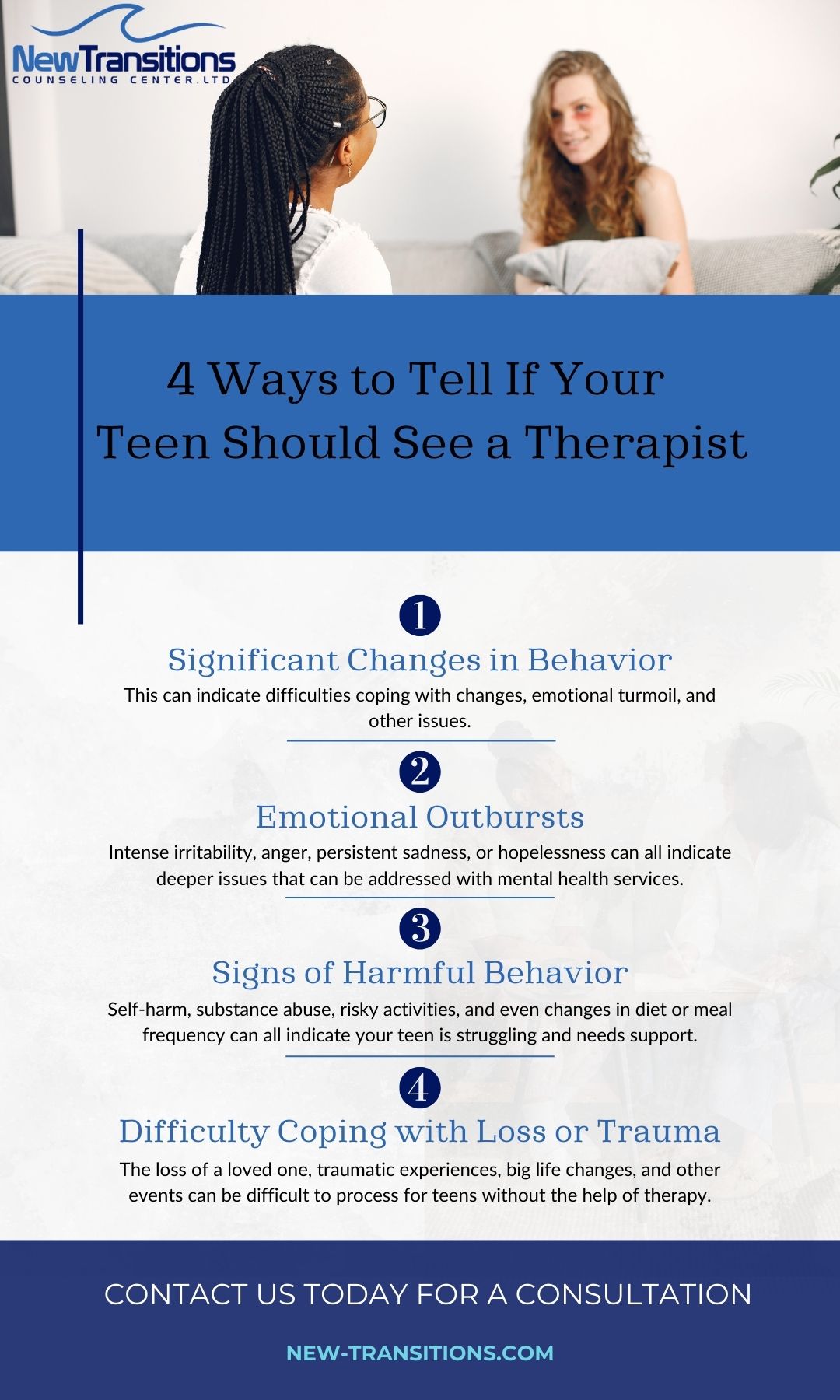
As young people face new pressures and developmental changes, it’s crucial to distinguish between typical teenage behavior and signs that indicate they might need professional support. Here are four key ways to tell if your teen might benefit from seeing a therapist. If you think your teen would benefit from mental health services, contact New Transitions Counseling Center to request a consultation.

Significant Changes in Behavior
Adolescence is naturally a time of change, but drastic shifts in your teen’s behavior could signal a deeper issue. Watch for signs like:
- Withdrawal from family and friends – if your usually social teen suddenly avoids interactions, it may indicate feelings of depression or anxiety.
- Decline in academic performance – a sudden drop in grades may show they’re struggling with emotional or mental health issues.
- Changes in sleep or eating habits -insomnia, oversleeping, or changes in appetite could suggest stress or other psychological concerns.

Emotional Outbursts
While mood swings are common during puberty, extreme emotional reactions might require attention. Be on the lookout for intense irritability or anger such as frequent outbursts disproportionate to the situation, as these could indicate underlying frustration or sadness. Persistent sadness or hopelessness might suggest depression, and a professional could offer strategies to cope.

Signs of Harmful Behavior
Any indication of self-harm or substance abuse should be addressed immediately. These behaviors can be coping mechanisms for underlying pain or distress. Even discussions about self-harm are cause for concern and should be taken seriously. Also look out for experimentation with drugs or alcohol, while experimentation is common, repeated use can point to attempts to self-medicate.

Difficulty Coping with Loss or Trauma
Teens often need support to process significant life events. If your teen has experienced:
- The loss of a loved one -grief can manifest in numerous ways, and a therapist can help them navigate their emotions.
- A traumatic event – experiences like bullying, an accident, or witnessing violence require careful handling and professional guidance.
If you recognize these signs in your teen, consider reaching out to New Transitions for a consultation. Therapy offers a safe space for them to express feelings and develop coping strategies. Your support and understanding, combined with professional guidance, can make a significant difference in your teen’s well-being.
RECENT BLOG POSTS

Finding Your Way: 4 Tips for Selecting the Right Counselor
Taking the first step toward personal growth is a courageous move that can lead to a more connected and fulfilling…

Navigating the Threshold: Moving Through Grief with Purpose
Losing someone irreplaceable feels like the world has stopped while everyone else keeps moving. At New Transitions, we understand that…

Creative Outlets for Expressing Grief and Finding Healing
At New Transitions Counseling Center in Palatine, Illinois, we understand that grief is a deeply personal journey that often defies…